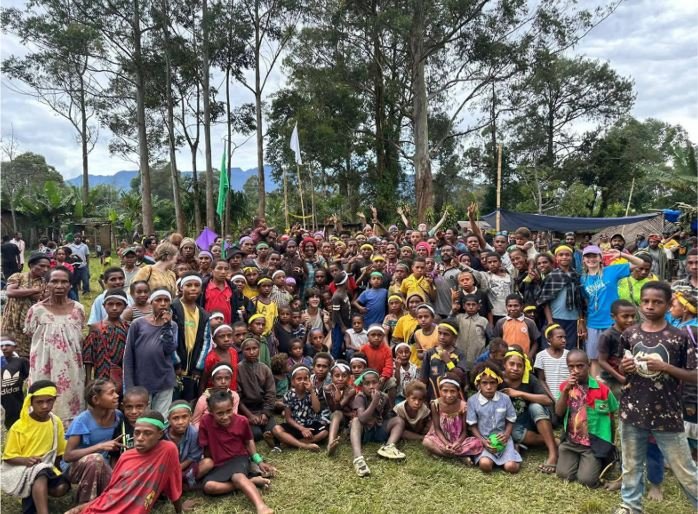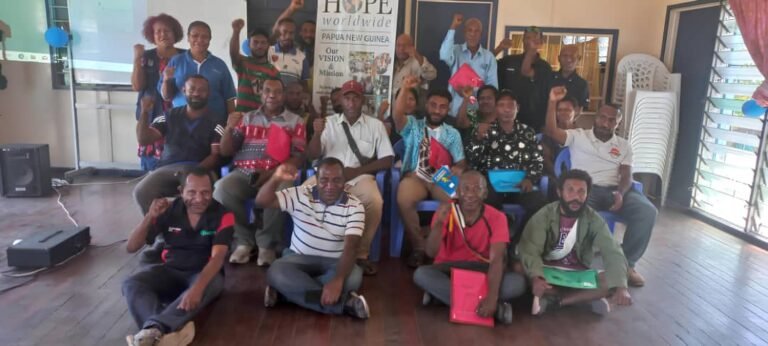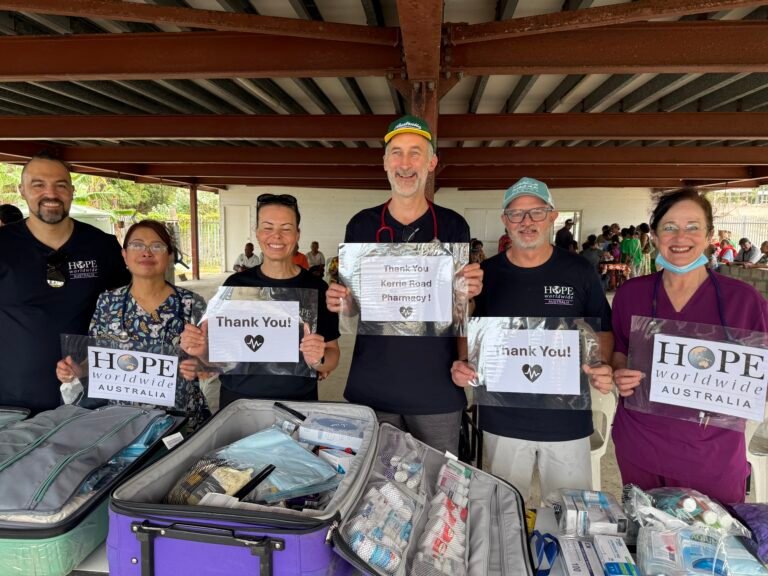

From interviews at the HOPE pop-up clinic in Boera, Central Province, on 1 August 2026.
Sibona
Last year Sibona fell sick. Her local clinic had run out of medicine, so she made the long trip to the city hospital, only to find it had none either. In Boera, medicines often run short, families walk to fetch water, and many people have had little chance to learn about health and hygiene. At HOPE’s pop-up clinic, Sibona had a full check-up to make sure nothing serious had been missed.
John
John has watched his community grow, and he’s encouraged to see older people he knew as a boy still with them, thanks to better care and health education. But critical care is still far away. People travel to the city by road or small boat, and some boats never return. When John’s aunt had chest pains that kept getting worse, the clinic referred her to hospital, but she had to wait until morning to travel. That night she had a stroke and died before she reached hospital. At the pop-up clinic, John brought his son to have a lump on his face checked.
Heni
Boera is close-knit and family-centred, but Heni grew up seeing people suffer for lack of care: pregnant women collapsing, and his mother living with a cough that years of clinic visits have not explained. When someone needs critical care, families may have to send them overseas, and the whole community and local businesses pitch in to pay. Heni came to the pop-up clinic to have a painful ear checked before flying out for work.
Gaiva
Gaiva works as a data collector and lives in Boera with his wife and five children. He shared how the village began: women made clay pots, and men sailed to trade them for food. Today the biggest challenge is unemployment, which leaves many families struggling to get by. He came to the pop-up clinic for a check-up with his family.